Social enterprise

Cultivating Empathy and Internal Awareness for Social Change

Processed with VSCOcam with k2 preset

“Empathy comes from the Greek empatheia—em (into) and pathos (feeling)—a penetration, a kind of travel. It suggests you enter another person’s pain as you’d enter another country, through immigration and customs, border crossing by way of query: What grows where you are? What are the laws? What animals graze there?…Empathy isn’t just remembering to say that must really be hard—it’s figuring out how to bring difficulty into the light so it can be seen at all. Empathy isn’t just listening, it’s asking the questions whose answers need to be listened to. Empathy requires inquiry as much as imagination.”

— Leslie Jamison, The Empathy Exams

In what David Brooks deemed an “empathy craze” of the past decade, several bestsellers exalted the values of empathy, followed by a series of widely circulated opinion pieces questioning the limits of empathy. Schools and social entrepreneurs preach the value of teaching empathy. The core of trendy human-centered design is empathetic listening and design. I too, caught on to the hype—seeking to better understand empathy as it relates to my own work in social enterprise and social design. Here is what I’ve begun to understand.

Empathy has a critical role to play in creating positive social change; it will enable us to become more collaborative and respond more thoughtfully to social issues. We can cultivate and teach empathy—with intentionality, or willed effort, not diminishing its power—and we can encourage empathy without requiring action or agreement. But before empathy can achieve it’s full impact in our lives and in positive social change, we must cultivate internal awareness to understand our own context in the world.

Through my exploration of empathy, I remain with more questions than answers, and know that my opinion will evolve and change over time. I offer my thoughts here because this subject is important to the public discourse on social change and personal development, and I hope that others wiser than me will offer their own ideas and feedback in response. (more…)

Why Every Social Entrepreneur Needs to Read This Book (Huffington Post)

Image

Originally posted on HuffPost Impact.

Paulo Freire, author of the seminal 1970 book Pedagogy of the Oppressed, saw the world not as a given reality, but as “a problem to be worked on and solved.” That mindset is a quality we attribute to the greatest social entrepreneurs. Yet, when so many well-intentioned social ventures globally seem to leave individuals dependent on aid instead of empowering them, Freire’s book should be required reading for every social entrepreneur.

While many in the social enterprise space are now excited by what we call “empowerment non-profits,” “human-centered design,” and “co-creation,” Freire and others working in activism and participatory development have been advocating for working with, and not for, the oppressed for more than 50 years. Furthermore, our culture of glorifying the social entrepreneur through awards, praise, and aspiration is contrary to the values of liberation. Based on the understanding of oppression and liberation from Pedagogy of the Oppressed, the role of the social entrepreneur would not be to act as liberator of the oppressed, but to work with the oppressed in the liberation of themselves and their oppressors. (more…)

How to Assess a Social Enterprise (Huffington Post)

My article originally posted on Huffington Post Impact. 

A friend transitioning from the corporate world to the social enterprise space recently asked me how to assess a social enterprise. How do we really know when an organization is doing quality work we should rally behind and having a real, positive impact, versus just using the right buzzwords?

The short answer is you can never really know. But there are a few aspects of a social enterprise, beyond their mission and approach, that you can critically examine before deciding to join or support one.

How do they talk about impact?

There are numerous ways to measure impact, and entire firms dedicated to doing so. There is no one “right” method, but the way a social enterprise talks about their impact may be an indicator of their operations and worldview.

Let’s say there’s a social enterprise that uses all the popularly accepted words about sustainable and holistic community development. And then when they talk about their impact they say, “We’ve built 100 schools in five countries in the past 10 years.” Maybe they have a video or slideshow of “people whose lives they’ve changed,” but not much more than general statements, and certainly nothing to prove sustainability or transparency. Maybe it’s just another case of Three Cups of Deceit. Or maybe they’re revolutionary, but how are we to know?

There is nothing wrong with statistics. They’re great. Here is how Educate!, a social enterprise operating in Uganda, talks about their impact:

(more…)

Adding Life to the Days of Terminally Ill Children in India (Huffington Post)

My article for Huffington Post on Happy Feet Home. Support their launch campaign here.

2013-12-17-201312160020554.jpg

When a child is terminally ill in India, they face a difficult road ahead. Their family is burdened with grief and expenses. Children are segregated from peers in their community due to a culture of fear and taboo for the terminally ill. When families from a rural area travel to a metropolitan city for medical support, they often have no place to live, turning to the streets. The lack of holistic medical and emotional support for a terminally ill child and their family exacerbates the grief and loss of hope. Enjoyable moments in the precious remaining time are limited. Two young entrepreneurs are changing this situation for the better by building India’s first children’s hospice center with the aim of ensuring that children and their family’s last days together are filled with dignity and joy.

Mansi Shah and Abhishek Tatiya are hoping to provide holistic medical and emotional support through Happy Feet Home, a daytime center in Lokmanya Tilak Municipal General Hospital (Sion Hospital) that will offer counseling, activities, and memorable moments for children and their families in their last days together. “Even if it is four months, let the child have the best four months ever,” Mansi proclaims. “At Happy Feet Home, we’re giving that kind of support and care. It’s a child-friendly space, colorful, vibrant, and full of joy. You step in and feel happy,” adds Abhishek.

(more…)

Vipin Thek: Changing Mindsets on Failure to Help Everyone Become a Changemaker (SocialStory)

One of my last pieces for SocialStory’s Celebrating Failure Series. 

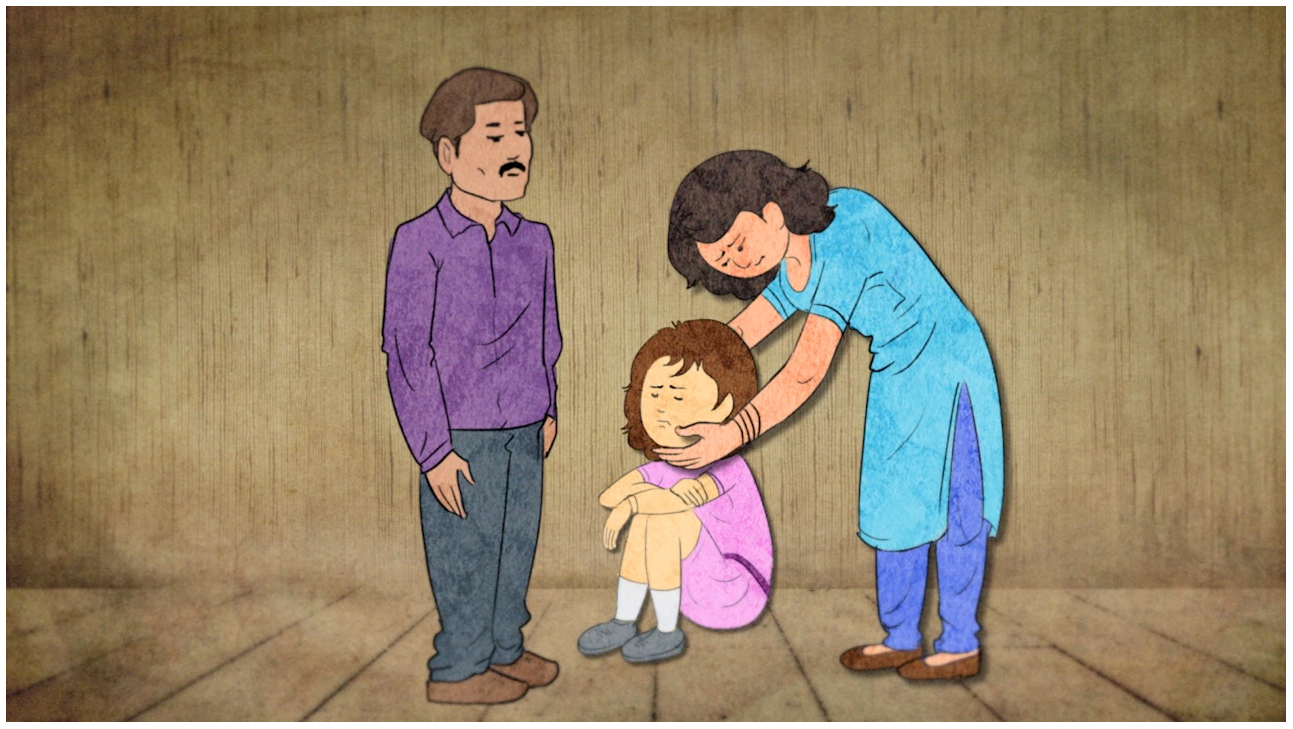
For the next edition of our series on lessons from failure, SocialStory spoke with Vipin Thek, who works for the Global Office at Ashoka. He previously led the Youth Venture program in India and co-founded an organization in Chennai that works to prevent child sexual abuse.

Here is his excellent advice for changemakers everywhere:

1. There is no failure, only growth

“I don’t follow the concept of failure,” says Vipin. “I believe that if you really look at life, there is no failure, only growth. When we do something that doesn’t go as planned, we need to learn from those experiences and grow from there, and not view it as a failure.”

(more…)

Attempting Sustainability (SocialStory)

Attempting Sustainability (SocialStory)

My article for SocialStory

You’ve heard the term “sustainability,” but have you thought about it outside of the environmental context? There are many ways in which social change programs can be unsustainable. Programs can be designed without a community’s real capacity, interest, or needs in mind. They can provide expensive and unfamiliar tools that community members don’t know how to use or fix on their own. Programs can give away resources for free without consideration for the potential long-term negative effects. They can be carried out without the proper processes or documentation in place that would ensure continuity in the event of staff or user turnover. Programs can also be managed without a financially sustainable model.

(more…)

Bombay Connect: Creating Space for Social Innovators (YourStory.in)

My article for YourStory.in

On the top floor of a modest building on a quiet street in Bandra, Mumbai, you’ll find a colorful and cozy office space. Inside, you’ll see bookshelves with an eclectic library collection and in between sunny windows, you’ll find pictures and colored post–its taped to brick walls. On one side of the post-its wall, people list support they need—graphic designers, new team members. On the other side, people list support they can provide—editing, business plan feedback. On any given day in the office, about 30 individuals can be found working on laptops at shared desks or holding meetings in one of the meeting rooms, all busy launching and developing business models to promote social change in India.

Co-working is a growing phenomenon that has doubled every year since 2006, with an estimated2,150 co-working spaces worldwide. India’s co-working scene is still nascent, but one of the most popular spaces is the aforementioned office in Mumbai—Bombay Connect, a co-working space for social innovators. It was founded three years ago under UnLtd India, an incubator for early-stage social entrepreneurs. UnLtd India started their incubation model with the intention of creating a complete support ecosystem for social enterprise in India, which is where Bombay Connect plays an integral role.

bombay-connect


Bombay Connect works on a membership model, and benefits include access to working space and events. The office co-working space includes desks, wireless internet access, a library, kitchenette, and conference and meeting rooms. Bombay Connect also hosts one to two events each week, including clinics on marketing, HR, finance, and fundraising. Fostering a strong sense of community among its members is of the essence to Bombay Connect, which hosts regular networking events such as music shows, pottery-making, cooking courses, and movie screenings. They also host monthly Dabba Chats, which are member-led meetings for peers to share ideas and solutions to problems such as sanitation, education, and technology. Events are open to both members and non-members to introduce non-members to the space and encourage new and different perspectives.

“I’m very happy with the ecosystem we’ve created. We’ve seen connections happen,” says Preeti Dawane, who oversees membership engagement and outreach activities at Bombay Connect. “I like the environment here—it’s easy-going and everyone is really helpful and easy to approach,” noted a new Bombay Connect member, who recently moved back to Mumbai to work on a marketing start-up and a NGO after living in the United States. “It’s a great platform to get to network with people who are very forthcoming in sharing ideas and insights.”

Bombay Connect has gradually grown in membership and now has over 50 members. Membership ranges from 1250 to 7200 rupees per month, depending on the number of hours a member works in the space. Approximately 90 percent of members work in social enterprise and 10 percent work with mainstream business. “We like to include mainstream entrepreneurs because they come with fresh ideas and energy, so that social entrepreneurs will benefit from their perspective,” says Dawane.

bombay-connect3-300x138

While co-working spaces have taken off in other countries, there are few co-working spaces in India. One reason, Dawane explains, is that entrepreneurs looking to keep low budgets will use their wireless connection from their home for work. Distance and travel time, especially considering Mumbai’s slow and unpredictable traffic, are also factors. Nonetheless, Dawane has seen a continued rise in membership, noting that “a lot is changing because of the benefits from co-working.”

Bombay Connect’s model enables India’s social entrepreneurs to pursue their ventures at lower start-up costs and foster synergies with other social enterprises. In the past three years, Bombay Connect has already seen its members thrive. “It’s great to see how members have grown out of the space when their team is big enough for them to move out. If they manage to grow out of the space and have their own office, and have their ideas take off, that’s part of the impact that we are having in the social space,” says Dawane. Bombay Connect eventually aims to move into a bigger office space and add different locations throughout the city, and throughout India, so that social entrepreneurs across the country can develop their ventures and collaborate in a Bombay Connect space.

Learn how to become a Bombay Connect member or attend an event here.

Bombay Connect: Creating Space for Social Innovators (YourStory.in)

GoodWeave’s Market-based Solution to End Child Labour in India’s Carpet-Weaving Industry

My article on GoodWeave for YourStory.in. 

When you purchase a new rug for your home, do you ask yourself who made it and under what conditions they work? With an estimated 250,000 child laborers currently trapped in South Asia’s robust carpet-weaving industry and adult workers also facing daily health and labor rights challenges, this is something that every socially mindful person should know.

One of India’s untold stories is that pockets of slavery still exist throughout the country, in the form of child labor. UNICEF estimates that 12% of children in India between ages 5 and 14 are exploited in child labor activities. According to some estimates, India has nearly 60 million child laborers, despite having 65 million jobless adults. GoodWeave, a business-NGO hybrid founded in India in 1994, creates a market incentive for the carpet-weaving industry to end its practice of child labor.

GoodWeave certifies rugs as child-labor-free and provides rehabilitation and educational opportunities for children rescued from carpet manufacturers. Now working in India, Nepal, and Afghanistan, it has sold more than 7.5 million certified carpets in Europe and North America, while decreasing the estimated number of children working in the carpet industry in South Asia from 1 million to 250,000. Rug exporters and importers sign a legally binding contract adhering to several standards including child-free labor, and agreeing to unannounced inspections. GoodWeave generates 20% of its income from licensing fees that exporters and importers pay to support GoodWeave’s monitoring and educational programs.

If a child laborer is found during a GoodWeave inspection, the rug manufacturer loses its certification and the child is immediately removed from the factory, returned to their family, and provided opportunities for education through local rehabilitation and education partners. To ensure that rescued children stay out of work and receive an education, GoodWeave provides monthly payments to the families, only released after assessing school records and regular check-ins.

India’s laws regarding child labor and education are becoming stricter, which assists GoodWeave in its mission. Along with the passage of the Right to Education Act—which guarantees free education to every child under 14—a new amendment to the Child Labour Act 1986 would ban employment of children under the age of 14. The current law only bans child labor below age 14 for “non-hazardous” work.

“One of harder things to look at is incidence of child labor and how that’s changing over time,” explains GoodWeave Executive Director Nina Smith, who won the Skoll Award for Social Entrepreneurship in 2005. As a market-driven model, GoodWeave assesses their impact with data from both the marketplace and the field. “Our theory is, as there is more market acceptance and as we gain market share [in the amount of certified carpets] and reach more communities, child labor is deterred and more victims are reached,” says Smith.
As the business environment has evolved, there has been increased consumer awareness around sustainability, and interest from bigger corporate buyers that face issues of compliance beyond child labor, explains Smith. GoodWeave recently revised its certification standards to address a range of factors affecting the carpet industry in South Asia including labor rights and environmental issues. Developing the new holistic standards was a complex, stakeholder inclusive process completed over three years. The revision fulfills GoodWeave’s founding charter’s goal to keep no-child-labor as the central focus while also addressing sustainability, health, and workers rights issues affecting the industry.

When it comes to addressing the global issue of child labor, Smith explains that there’s a need for individual, government, and business action, and education for the next generation. Smith argues that consumers have a major role to play in thinking about everything they buy, from GoodWeave certified carpets to local agriculture products (child labor is also a big problem in the agriculture industry). Consumers also need to ask questions and advocate for change at the business level. “When you go to buy a product, ask questions,” says Smith. “Be more active at the point of purchase and understand where products come from, and make sure that people on the sales floor know where their products are sourced.”

The historical trend has been that market-based models result in the systematic exploitation of children. What’s innovative about GoodWeave’s solution is that they enter the market from the same angle, but do so to end the problem instead of fueling it.

Learn more about GoodWeave’s work and resources here.

GoodWeave’s Market-based Solution to End Child Labour in India’s Carpet-Weaving Industry